Surely everyone (myself included) has experienced disappointment when they found out a celebrity that they liked did something atrocious. Some people choose to live in denial- witness the throngs of Mel Gibson defenders for a recent example- but some wonder if they should divorce themselves from their love and financial support of the offending celeb. It can be difficult to call. One can likely watch Mad Max with impunity, as movies are a collaborative effort. Surely not everyone involved was such a hater.
But what about writers? They are, with some notable exceptions, solely responsible for their output. Do we want to give our money to a person who is known as a misogynist? A racist? Or can we still enjoy a work of literature that was written by someone who we strongly dislike?
I'm not talking about content here. It's easy to feel uncomfortable when the prose itself is sexist. We've heard all about Roth and Updike, Hemingway and Faulkner. I'm talking about behind the scenes. Like Norman Mailer famously stabbing his second wife with a penknife. Like V.S. Naipaul, his racist rants, and the way he used women without giving them anything in return. What does it say about us if we enjoy literature born of these unattractive personalities?
Maybe nothing. Many great artists have something unpalatable in their histories- just like everyone. Some are alcoholics, some are rude, some egotistical, some selfish. Self-aggrandizement or self-destruction can be off-putting, but then again, fame does strange things to people, and notoriety can be quite a curse. But there's a special kind of turn off that comes from harming or discriminating against others. I can understand the many motivations behind drinking to excess, but stabbing your wife... well, that's something else entirely.
What if someone you knew did such things? Would you avoid their company? If you somehow caught wind of a neighbor doing something unthinkable, you likely wouldn't give him any show of support, even if you didn't condemn the actions outright. We don't actually know the folks in question, though, so that makes standing against an action seem less necessary.
We can't know everything about everyone. We all unwittingly give financial or other support to people who have disregarded our strongly-held personal values. Do boycotts achieve the desired result (especially since many authors on this list have already passed)? Public humiliation could be effective, if only we didn't operate on the assumption that “any publicity is good publicity.” And ultimately, what happened has already happened. Our reactions can't change that.
We could be focusing our efforts on prevention rather than opposition, but if calling out someone for their actions helps to change the culture, then perhaps it is worth the effort. What if every time someone famous was found to be an abuser, he didn't get away with it? What if over-the-line sexist or homophobic remarks diminished popularity and financial return? Granted, famous people are still just people at their core, but in our culture, we lift them up above normal status. If someone we idolize says or does something terrible, it is permissioned. Considered normal. It's hard enough to call our friends on jokes made in poor taste, so getting folks to disregard media images can seem like an insurmountable challenge. This isn't as prevalent amongst authors, but it does happen. How many young women adore Stephanie Meyer, author of the abusive-relationship-couched-in-sparkly-vampire-terms Twilight Saga? (How I long for the days when 'tweens read about Hermione, the independent and intelligent heroine in the Harry Potter books.)
There is no right answer. Fortunately, there are options for opting out. We can check out books from the library, where we are not directly financially supporting folks whose views or actions make us uneasy. It goes without saying that we don't have to write fan letters. Maybe we can distance ourselves and still enjoy the book.
Saturday, July 24, 2010

Saturday, July 10, 2010
Feminism and Literature: Young Fiction
“Peter, Peter, pumpkin eater,
Had a wife and couldn't keep her.
He put her in a pumpkin shell
And there he kept her, very well.”
Do you really want your children reading something like this?
A lot of literature for kids doesn't cast women in the best light. Stories can be overtly sexist, write female characters as two-dimensional, or imply that certain outdated cultural values should be held in the highest regard. Lots of adults get attached to books they knew as children and, when sentimentality prevails over logic, read these women-negative tales to their own kids. Or maybe because fewer books are written for kids than for adults do we delve again and again into nonsense like the nursery rhyme above. It seems that until very recently, strong female representations were few and far between.
Got a kid? Baby sitting? Here are a few suggestions for stories with good feminist ideals. Please read to girls and boys alike.
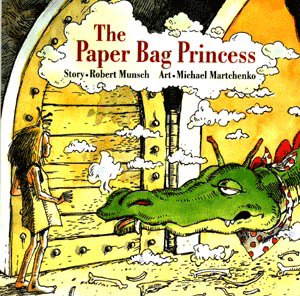 The Paper Bag Princess by Robert Munsch: This book does play into the girls-reading-about-princesses stereotype, but that's where it ends. Elizabeth is a clever and brave heroine who stands up to a dragon to save her Prince Charming. When he turns out to be obsessed with her looks above all else, she dumps him.

Princess Smartypants by Babette Cole: "Princess Smartypants did not want to get married. She enjoyed being a Ms." No matter how many suitors, she is always able to find a new, impossible challenge for her hand. No one can meet her demands, and the princess stays happily single. Another smart, independent, self-actualized princess for young readers.
 Tough Chicks by Cece Meng: Penny, Polly and Molly aren't your typical chicks; they run wild, wrestle the livestock, and tinker with the tractor. The rest of the barnyard is appalled by their behavior, but mama hen believes they are different in a good way. And of course, their independence saves the day in the end.
 The Country Bunny and the Little Gold Shoes by DuBose Heyward: Written in 1939 (!), Country Bunny tells the story of Cottontail. She's always dreamed of becoming the Easter Bunny but shelved her aspirations in order take care of her 21 children. She eventually realizes her goal, winning the job with wisdom, kindness, determination... and speed, a skill perfected by chasing her multitude of children. A refreshing take on mothers and their many talents.
Not all books have an explicitly feminist message, but strong females characters can model one of the most important feminist principles of all- be yourself. Some examples: Harriet The Spy by Louise Fitzhugh, Sabriel by Garth Nix, Pippi Longstocking by Astrid Lindgren, the Ramona Quimby books by Beverly Cleary, Matilda by Roald Dahl, The True Confessions of Charlotte Doyle by Avi.
Is your favorite feminist book for young readers missing? Please suggest more in the comments section.
Had a wife and couldn't keep her.
He put her in a pumpkin shell
And there he kept her, very well.”
Do you really want your children reading something like this?
A lot of literature for kids doesn't cast women in the best light. Stories can be overtly sexist, write female characters as two-dimensional, or imply that certain outdated cultural values should be held in the highest regard. Lots of adults get attached to books they knew as children and, when sentimentality prevails over logic, read these women-negative tales to their own kids. Or maybe because fewer books are written for kids than for adults do we delve again and again into nonsense like the nursery rhyme above. It seems that until very recently, strong female representations were few and far between.
Got a kid? Baby sitting? Here are a few suggestions for stories with good feminist ideals. Please read to girls and boys alike.
The Paper Bag Princess by Robert Munsch: This book does play into the girls-reading-about-princesses stereotype, but that's where it ends. Elizabeth is a clever and brave heroine who stands up to a dragon to save her Prince Charming. When he turns out to be obsessed with her looks above all else, she dumps him.Princess Smartypants by Babette Cole: "Princess Smartypants did not want to get married. She enjoyed being a Ms." No matter how many suitors, she is always able to find a new, impossible challenge for her hand. No one can meet her demands, and the princess stays happily single. Another smart, independent, self-actualized princess for young readers.
 Tough Chicks by Cece Meng: Penny, Polly and Molly aren't your typical chicks; they run wild, wrestle the livestock, and tinker with the tractor. The rest of the barnyard is appalled by their behavior, but mama hen believes they are different in a good way. And of course, their independence saves the day in the end.
 The Country Bunny and the Little Gold Shoes by DuBose Heyward: Written in 1939 (!), Country Bunny tells the story of Cottontail. She's always dreamed of becoming the Easter Bunny but shelved her aspirations in order take care of her 21 children. She eventually realizes her goal, winning the job with wisdom, kindness, determination... and speed, a skill perfected by chasing her multitude of children. A refreshing take on mothers and their many talents.
Not all books have an explicitly feminist message, but strong females characters can model one of the most important feminist principles of all- be yourself. Some examples: Harriet The Spy by Louise Fitzhugh, Sabriel by Garth Nix, Pippi Longstocking by Astrid Lindgren, the Ramona Quimby books by Beverly Cleary, Matilda by Roald Dahl, The True Confessions of Charlotte Doyle by Avi.
Is your favorite feminist book for young readers missing? Please suggest more in the comments section.
Tuesday, July 6, 2010
Feminism and Literature: Tales of Passion
Isabel Allende is an author known for her strong female characters. Since her first novel, The House of the Spirits, Allende's tales of passion have focused on feminism and empowering women. Here she tells tales of tough, brave, inspirational women, but not from her books- these women are real.
Friday, June 25, 2010
The End of Men
Men are on the way out.
The Atlantic has declared that women are taking over everything. Yes, this month's issue officially declares “the end of men”. The telltale signs are all here. More people ask for girls than boys when choosing the sex of their yet-to-be-conceived child. Thirteen of the fifteen fastest growing job categories are dominated by women. Managerial positions are occupied by women more than half (51.4%) of the time. Women earn 60% of all bachelors degrees. Men have failed to adapt to today's harsh economy.
Anyone else seeing the flaws in this “end of men” argument? And why does this sound so familiar? Seems like we've seen enough of the men-getting-the-short-end-of-the-money/career/education-stick argument to last us the rest of our lives. But before taking my place atop my soapbox, a brief disclaimer: talking about women in a positive way is just fine. Please do that, writers. But let's not frame it as a male downfall. Time to poke some holes in these arguments.
First off, let's take a closer look at the content of this story, starting with that management statistic. Fifty one percent of management jobs are held by women? A veritable takeover! How fascinating that women make up... oh... 51% of the population! How about those 13 fast-growing jobs the article talks about? It gives us four examples of the lower-paid, “nurturing” professions women have been stereotyped into working for the past few decades: nursing, home health assistance, child care, food preparation. The article also mentions that 1 in 5 men lost their jobs due to the recession, mostly because their jobs were more project-oriented and less service-oriented. To me, this sounds like no one is a winner. Women may work more, but they are stuck in dead-end jobs to support their families, while men have taken a self-esteem hit because they are unable to work. While we're rethinking our existing paradigms, maybe it's time to admit that in a time when jobs are scarce, tech schools (which more men attend) may be a more secure path than a liberal arts education. Women get 60% of college degrees but still occupy lower-paying and lower-ranking positions; most higher management- or CEO-type positions still go to men. We have yet to change our perceptions, rendering these statistics utterly worthless.
Let me quote some statistics of my own, Atlantic magazine, and then you can tell me whether you still think men are horribly downtrodden. Currently, females hold about 17% of congressional positions; the 17 female of 100 total senators and the 74 women in the 435-member house are both all-time highs. Your own article tells us that between women and men 25-34 with no higher education, there is still a nearly $7,000 per year wage gap. One in four women will be sexually assaulted. Twice as many women as men will be affected by depression in their lifetimes. Need I go on?
This article would have been much more interesting and relevant if it had discussed gender stereotypes instead of claiming that women were taking over the world. Women in well-to-do countries are gaining ground in the traditionally male arena; men, however, are having more difficulty embracing their femininity. Why is that? Could it be because we consistently favor the masculine over the feminine? Oh yes, regular readers have heard this before. If we give permission for women to be more like men, we must also allow men to act more like women. Society must begin to value characteristics traditionally thought of as feminine.
I would love to see women get the equal pay, equal representation, and equal protections I discussed earlier. I would love to see men as stay-at-home parents, or at least valued for their nurturing qualities in addition to their careers. I would love to see men wearing nail polish, crying when they needed to, or commenting on how cute kids are without being seen as abnormal. Most importantly, I would love for any barriers to be removed so that everyone of any gender can fully realize themselves.
Creating a “battle of the sexes” helps no one. Quit sensationalizing things to try to sell magazines. I long for the day we can celebrate women's achievements without falsely accusing them of taking too much.
The Atlantic has declared that women are taking over everything. Yes, this month's issue officially declares “the end of men”. The telltale signs are all here. More people ask for girls than boys when choosing the sex of their yet-to-be-conceived child. Thirteen of the fifteen fastest growing job categories are dominated by women. Managerial positions are occupied by women more than half (51.4%) of the time. Women earn 60% of all bachelors degrees. Men have failed to adapt to today's harsh economy.
Anyone else seeing the flaws in this “end of men” argument? And why does this sound so familiar? Seems like we've seen enough of the men-getting-the-short-end-of-the-money/career/education-stick argument to last us the rest of our lives. But before taking my place atop my soapbox, a brief disclaimer: talking about women in a positive way is just fine. Please do that, writers. But let's not frame it as a male downfall. Time to poke some holes in these arguments.
First off, let's take a closer look at the content of this story, starting with that management statistic. Fifty one percent of management jobs are held by women? A veritable takeover! How fascinating that women make up... oh... 51% of the population! How about those 13 fast-growing jobs the article talks about? It gives us four examples of the lower-paid, “nurturing” professions women have been stereotyped into working for the past few decades: nursing, home health assistance, child care, food preparation. The article also mentions that 1 in 5 men lost their jobs due to the recession, mostly because their jobs were more project-oriented and less service-oriented. To me, this sounds like no one is a winner. Women may work more, but they are stuck in dead-end jobs to support their families, while men have taken a self-esteem hit because they are unable to work. While we're rethinking our existing paradigms, maybe it's time to admit that in a time when jobs are scarce, tech schools (which more men attend) may be a more secure path than a liberal arts education. Women get 60% of college degrees but still occupy lower-paying and lower-ranking positions; most higher management- or CEO-type positions still go to men. We have yet to change our perceptions, rendering these statistics utterly worthless.
Let me quote some statistics of my own, Atlantic magazine, and then you can tell me whether you still think men are horribly downtrodden. Currently, females hold about 17% of congressional positions; the 17 female of 100 total senators and the 74 women in the 435-member house are both all-time highs. Your own article tells us that between women and men 25-34 with no higher education, there is still a nearly $7,000 per year wage gap. One in four women will be sexually assaulted. Twice as many women as men will be affected by depression in their lifetimes. Need I go on?
This article would have been much more interesting and relevant if it had discussed gender stereotypes instead of claiming that women were taking over the world. Women in well-to-do countries are gaining ground in the traditionally male arena; men, however, are having more difficulty embracing their femininity. Why is that? Could it be because we consistently favor the masculine over the feminine? Oh yes, regular readers have heard this before. If we give permission for women to be more like men, we must also allow men to act more like women. Society must begin to value characteristics traditionally thought of as feminine.
I would love to see women get the equal pay, equal representation, and equal protections I discussed earlier. I would love to see men as stay-at-home parents, or at least valued for their nurturing qualities in addition to their careers. I would love to see men wearing nail polish, crying when they needed to, or commenting on how cute kids are without being seen as abnormal. Most importantly, I would love for any barriers to be removed so that everyone of any gender can fully realize themselves.
Creating a “battle of the sexes” helps no one. Quit sensationalizing things to try to sell magazines. I long for the day we can celebrate women's achievements without falsely accusing them of taking too much.
Friday, June 4, 2010
Play Like a Girl
Anyone remember that old insult heard on the playground when boys weren't too hot at sports? “You play like a girl.” No wonder so many women feel incapable of athleticism from a very young age. This is annoying in and of itself, and could certainly (and perhaps one day will) constitute its own entry. But today I want to write about the other use of this epithet: music.
My male partner loves Sleater-Kinney. He was watching a video of theirs and happened to read the comment section. There were lots of folks who said they were “pretty good for girls”. This angered my partner, who rightly believed that Sleater-Kinney is just plain good. The gender issue annoyed him even more after reading a story about a woman in an orchestra who became the lead trombonist only after the organization switched to blind auditions. The conductor was flabbergasted that a female was the best trombone player and treated her badly. But in the end, he chose her for the position without realizing she was a woman. So I decided to hold my own "auditions", popular music-style.
My extremely unscientific, simply-to-satisfy-my-own-curiosity, will-never-and-should-never-be-published-anywhere-but-on-a-blog “study” went like this: Participants (AKA my open-minded friends) listened to ten different musical samples, all about thirty seconds long. Five of the artists were men, five were women. If multiple musicians were involved, all people within the sample were the same gender, so as not to confuse things. No vocals appeared at all. Participants were asked to guess the gender of the musicians based only on the instrumental performance and overall sound.
I hypothesized that people would get an average of five correct; this turned out to be a very bad hypothesis. One lucky participant got six right (and he admitted to blindly guessing), but the average fell between three and four. One participant only guessed two correctly. I am pleased that so many folks got these so wrong, because my point has been proven: people simply don't know what gender a recorded musician is unless they sing- and sometimes not even then.
What else did I glean from this “study”? People seemed the most sure of a musician's gender when they were incorrect. One person wrote “definitely a dude” when referring to a guitar solo by Mary Timony. The all-male Fugazi sounded like women to all but one participant. And most importantly, only one person thought that Sleater-Kinney sounded female. Most folks were strongly convinced that they were men. So it turns out that Sleater-Kinney sound exactly the same as any male musicians would. Big surprise.
The moral of the story? Everyone plays like a girl.
My male partner loves Sleater-Kinney. He was watching a video of theirs and happened to read the comment section. There were lots of folks who said they were “pretty good for girls”. This angered my partner, who rightly believed that Sleater-Kinney is just plain good. The gender issue annoyed him even more after reading a story about a woman in an orchestra who became the lead trombonist only after the organization switched to blind auditions. The conductor was flabbergasted that a female was the best trombone player and treated her badly. But in the end, he chose her for the position without realizing she was a woman. So I decided to hold my own "auditions", popular music-style.
My extremely unscientific, simply-to-satisfy-my-own-curiosity, will-never-and-should-never-be-published-anywhere-but-on-a-blog “study” went like this: Participants (AKA my open-minded friends) listened to ten different musical samples, all about thirty seconds long. Five of the artists were men, five were women. If multiple musicians were involved, all people within the sample were the same gender, so as not to confuse things. No vocals appeared at all. Participants were asked to guess the gender of the musicians based only on the instrumental performance and overall sound.
I hypothesized that people would get an average of five correct; this turned out to be a very bad hypothesis. One lucky participant got six right (and he admitted to blindly guessing), but the average fell between three and four. One participant only guessed two correctly. I am pleased that so many folks got these so wrong, because my point has been proven: people simply don't know what gender a recorded musician is unless they sing- and sometimes not even then.
What else did I glean from this “study”? People seemed the most sure of a musician's gender when they were incorrect. One person wrote “definitely a dude” when referring to a guitar solo by Mary Timony. The all-male Fugazi sounded like women to all but one participant. And most importantly, only one person thought that Sleater-Kinney sounded female. Most folks were strongly convinced that they were men. So it turns out that Sleater-Kinney sound exactly the same as any male musicians would. Big surprise.
The moral of the story? Everyone plays like a girl.
Saturday, May 8, 2010
Moms as Feminists
It's Mother's Day. Today seems like an apt time to examine motherhood and feminism. Becoming a mother has been much maligned by feminists past and present, but today, perhaps we can look at the reasons that becoming a mother is a feminist thing to do.
Motherhood wasn't really thought of as optional when the earliest feminists were doing their work. The thought of birth control was abhorrent to many folks, and most women had no viable option outside of home and family. So it is easy to see why, when birth control arrived and allowed women to delay or opt-out of having children, many women embraced the opportunity. As women gained more equality and were able to work outside the home, many found this new freedom more important than anything else. Some even dismissed motherhood altogether. The rationale behind it makes sense on the surface- having children makes having a career more difficult, and it had been difficult for long enough. The need to expand the ideas of what a woman could do with her life was also strong. Choosing career over children sent the message that women didn't have to have a family to be legitimate. This is a very important message, and I for one am glad it was sent.
Women have gotten past the misperception that they must stay home and not have careers. Today's fights are for more subtle things like equal opportunities, equal pay and more family leave. It seems as though women can safely have children without precluding them from a fulfilling career, or from any other pursuits outside the home. I am thankful that many women sacrificed so that we can have choices. Choices are one of the best things to have come from the feminist movement. The fact that most women in many countries now get to decide whether to have children is amazing and wonderful. We should take advantage of our capacity for choice! Deciding to have a child (or not) is exercising your options- and either one is a feminist thing to do.
Some folks say that focusing on a family puts women in a stereotypical role, trapping them, continuing to view them as nurturers above all else. I suppose that could be true for many people. I definitely understand the fears of loss of self or loss of aspirations. This is a tricky issue for which there is no easy answer. Being a mom is hard enough; staying true to yourself through it all is a feat that many cannot pull off. But telling a woman who loves to cook not to do so because it reinforces stereotypes is limiting her options in a different way. Yes, it is good to examine our motivations and actions, but we should also accept that motherhood is desirable to many people, societal norm or not.
I would hope that all moms have enough support to have children and identity, but that just isn't the case for everyone. Perhaps the next issues we should tackle will be ones surrounding support of mothers and families: adequate family leave, affordable childcare, more flexible workplaces, and so on. We don't have to tell women not to be mothers, but we should support them more. In the meantime it falls more to mothers to nurture their kids and still retain their sense of identity. Fighting against an unspoken societal norm is no small task. Have you told your mother how awesome she is?
While we're at it, let's make it normal for men to be nurturers, too. Why should women be the ones who are pigeonholed into that role? More and more, men want to be seen in that light- there are more stay-at-home dads and partners taking equal responsibility for childcare. Every gender has the capacity to be loving and caring. Let's not say that nurturing is only a feminine quality, but make nurturing the norm for all genders. Men also deserve to connect with their children without being seen as weird.
Many folks would disagree with this, but I believe that giving birth- one of the earliest events for a mother- is something to be celebrated. In my mind, birth is often dismissed as a problem, strictly medical, which is just a big inconvenience for everyone involved. It doesn't have to be that way. We should be in awe of those who make it happen. We should realize that birth can be a celebration of the strength of women. Let's stop seeing it as a drag and reclaim it for the amazing feminist event it can be. (Disclaimer: it doesn't make you any less of an awesome mom if you adopted. I'm just presenting all the reasons why being a mother can be a feminist thing to do.)
So a woman has exercised her choice and decided to become a mom. She has a child and has incorporated motherhood into her intact identity. The next step? Raising feminist children. I don't mean that parents have to drill feminism into their children from a very young age. Honestly, that sounds a little creepy and possibly damaging. But showing children what a feminist looks like can be a bold and effective feminist statement. Kids are smart, and they definitely learn by example. This is why I love when feminists have children; those children are likely to grow into feminist adults.
So thanks, moms, for raising all of us feminists. A big shout out to you for doing it all, even when that was really difficult. Raising kids will never be easy, but thanks to women like you, we see that we can have our cake and eat it, too. Happy mother's day to all you moms out there (but especially mine)!
Motherhood wasn't really thought of as optional when the earliest feminists were doing their work. The thought of birth control was abhorrent to many folks, and most women had no viable option outside of home and family. So it is easy to see why, when birth control arrived and allowed women to delay or opt-out of having children, many women embraced the opportunity. As women gained more equality and were able to work outside the home, many found this new freedom more important than anything else. Some even dismissed motherhood altogether. The rationale behind it makes sense on the surface- having children makes having a career more difficult, and it had been difficult for long enough. The need to expand the ideas of what a woman could do with her life was also strong. Choosing career over children sent the message that women didn't have to have a family to be legitimate. This is a very important message, and I for one am glad it was sent.
Women have gotten past the misperception that they must stay home and not have careers. Today's fights are for more subtle things like equal opportunities, equal pay and more family leave. It seems as though women can safely have children without precluding them from a fulfilling career, or from any other pursuits outside the home. I am thankful that many women sacrificed so that we can have choices. Choices are one of the best things to have come from the feminist movement. The fact that most women in many countries now get to decide whether to have children is amazing and wonderful. We should take advantage of our capacity for choice! Deciding to have a child (or not) is exercising your options- and either one is a feminist thing to do.
Some folks say that focusing on a family puts women in a stereotypical role, trapping them, continuing to view them as nurturers above all else. I suppose that could be true for many people. I definitely understand the fears of loss of self or loss of aspirations. This is a tricky issue for which there is no easy answer. Being a mom is hard enough; staying true to yourself through it all is a feat that many cannot pull off. But telling a woman who loves to cook not to do so because it reinforces stereotypes is limiting her options in a different way. Yes, it is good to examine our motivations and actions, but we should also accept that motherhood is desirable to many people, societal norm or not.
I would hope that all moms have enough support to have children and identity, but that just isn't the case for everyone. Perhaps the next issues we should tackle will be ones surrounding support of mothers and families: adequate family leave, affordable childcare, more flexible workplaces, and so on. We don't have to tell women not to be mothers, but we should support them more. In the meantime it falls more to mothers to nurture their kids and still retain their sense of identity. Fighting against an unspoken societal norm is no small task. Have you told your mother how awesome she is?
While we're at it, let's make it normal for men to be nurturers, too. Why should women be the ones who are pigeonholed into that role? More and more, men want to be seen in that light- there are more stay-at-home dads and partners taking equal responsibility for childcare. Every gender has the capacity to be loving and caring. Let's not say that nurturing is only a feminine quality, but make nurturing the norm for all genders. Men also deserve to connect with their children without being seen as weird.
Many folks would disagree with this, but I believe that giving birth- one of the earliest events for a mother- is something to be celebrated. In my mind, birth is often dismissed as a problem, strictly medical, which is just a big inconvenience for everyone involved. It doesn't have to be that way. We should be in awe of those who make it happen. We should realize that birth can be a celebration of the strength of women. Let's stop seeing it as a drag and reclaim it for the amazing feminist event it can be. (Disclaimer: it doesn't make you any less of an awesome mom if you adopted. I'm just presenting all the reasons why being a mother can be a feminist thing to do.)
So a woman has exercised her choice and decided to become a mom. She has a child and has incorporated motherhood into her intact identity. The next step? Raising feminist children. I don't mean that parents have to drill feminism into their children from a very young age. Honestly, that sounds a little creepy and possibly damaging. But showing children what a feminist looks like can be a bold and effective feminist statement. Kids are smart, and they definitely learn by example. This is why I love when feminists have children; those children are likely to grow into feminist adults.
So thanks, moms, for raising all of us feminists. A big shout out to you for doing it all, even when that was really difficult. Raising kids will never be easy, but thanks to women like you, we see that we can have our cake and eat it, too. Happy mother's day to all you moms out there (but especially mine)!
Wednesday, May 5, 2010
Sticks and Stones
That's so hetero.
That's often what I say after someone uses the phrase “that's so gay” to mean “that's so stupid.” A lot of really awesome folks do it, so I don't mean it as an insult, but rather as an attempt to illuminate how discriminatory language can be. We all get trapped in it. I remember discovering, at age 22 (!), that the word I previously thought to be “jip” was actually spelled “gyp”- derogatory slang for gypsy. I felt so terrible. How had I been using this word?
Language has power. It worms its way into our brains and stays there. We all say things that we probably shouldn't at some points in our lives, and that certainly doesn't make us bad people. But perhaps we should be more aware of the language we're subconsciously choosing and what the ramifications are.
Take language and gender. Some languages are obvious about gender divisions, making every noun either masculine or feminine. English doesn't go quite that far, but there are definitely gendered words. And sometimes, I'm not such a fan. For example, a man who has lots of sex is a “stud” or a “don Juan”; a woman who does the same thing gets called “slut” or “whore”. OK, sometimes men are called “man sluts”, but to my way of thinking, that's no improvement. Or consider a man who is showing weakness getting called a “pussy”. And speaking of pussy, did you know that the word “vagina” actually means “sheath”, as in a sheath for a sword? There has to be a better word, people.
We usually don't notice when this sort of language pops up in conversation. But after hearing such insults for years, women start to internalize them, just as we internalize the barrage of ads featuring impossibly perfect models. Fortunately, many feminists and sociologists have called out these visuals for how they affect a woman's psyche. Unfortunately, language is rarely thought of as a problem of the same magnitude, and in fact, those who remind us about language are thought of as overly PC or nit picky. It is pretty difficult to call out the word without sounding as though you are criticizing the speaker or their ideals. A friend of mine did this effectively by saying “I agree with the sentiment, if not the word choice.” That tended to start a conversation rather than alienating the speaker or getting herself branded a “humorless feminist.”
But why even bother bringing attention to it? Language can be indicative of a larger societal problem, so even though we don't usually process the intention behind words, they still reinforce the narrow mindedness they were born from. People can call women (and other marginalized folks) all sorts of subtle insults that masquerade as common parlance, meaning that no matter how much negativity is put behind those words, it is still socially acceptable to use them. I'm not just talking about men unintentionally disrespecting women. I'm always surprised to hear a woman calling another a “whore” because she is wearing a low-cut shirt or otherwise displaying that she may occasionally be in touch with her sexuality. I suppose that for some, “good” girls don't do things like that. But where's the in between?
Discriminatory language only serves to pit stereotype against stereotype. Rather than innocently use words that have an underlying divisiveness, we could consciously choose words that foster understanding and promote individuality and equality. It may be a small step, but it is a step nonetheless. And hopefully, when we change our language, our perceptions of what we're describing will subtly shift.
I'll leave you with a quote from a recent Savage Love. Thank you, Dan, for this perspective:
“You are a huge pussy, CTOAC- excuse me, sorry. Pussies are powerful; they can take a pummeling and spit out a brand new human being. What you are, CTOAC, is weak, vulnerable, easily manipulated, and far too sensitive for your own good.
What you are is a ball-sack.”
That's often what I say after someone uses the phrase “that's so gay” to mean “that's so stupid.” A lot of really awesome folks do it, so I don't mean it as an insult, but rather as an attempt to illuminate how discriminatory language can be. We all get trapped in it. I remember discovering, at age 22 (!), that the word I previously thought to be “jip” was actually spelled “gyp”- derogatory slang for gypsy. I felt so terrible. How had I been using this word?
Language has power. It worms its way into our brains and stays there. We all say things that we probably shouldn't at some points in our lives, and that certainly doesn't make us bad people. But perhaps we should be more aware of the language we're subconsciously choosing and what the ramifications are.
Take language and gender. Some languages are obvious about gender divisions, making every noun either masculine or feminine. English doesn't go quite that far, but there are definitely gendered words. And sometimes, I'm not such a fan. For example, a man who has lots of sex is a “stud” or a “don Juan”; a woman who does the same thing gets called “slut” or “whore”. OK, sometimes men are called “man sluts”, but to my way of thinking, that's no improvement. Or consider a man who is showing weakness getting called a “pussy”. And speaking of pussy, did you know that the word “vagina” actually means “sheath”, as in a sheath for a sword? There has to be a better word, people.
We usually don't notice when this sort of language pops up in conversation. But after hearing such insults for years, women start to internalize them, just as we internalize the barrage of ads featuring impossibly perfect models. Fortunately, many feminists and sociologists have called out these visuals for how they affect a woman's psyche. Unfortunately, language is rarely thought of as a problem of the same magnitude, and in fact, those who remind us about language are thought of as overly PC or nit picky. It is pretty difficult to call out the word without sounding as though you are criticizing the speaker or their ideals. A friend of mine did this effectively by saying “I agree with the sentiment, if not the word choice.” That tended to start a conversation rather than alienating the speaker or getting herself branded a “humorless feminist.”
But why even bother bringing attention to it? Language can be indicative of a larger societal problem, so even though we don't usually process the intention behind words, they still reinforce the narrow mindedness they were born from. People can call women (and other marginalized folks) all sorts of subtle insults that masquerade as common parlance, meaning that no matter how much negativity is put behind those words, it is still socially acceptable to use them. I'm not just talking about men unintentionally disrespecting women. I'm always surprised to hear a woman calling another a “whore” because she is wearing a low-cut shirt or otherwise displaying that she may occasionally be in touch with her sexuality. I suppose that for some, “good” girls don't do things like that. But where's the in between?
Discriminatory language only serves to pit stereotype against stereotype. Rather than innocently use words that have an underlying divisiveness, we could consciously choose words that foster understanding and promote individuality and equality. It may be a small step, but it is a step nonetheless. And hopefully, when we change our language, our perceptions of what we're describing will subtly shift.
I'll leave you with a quote from a recent Savage Love. Thank you, Dan, for this perspective:
“You are a huge pussy, CTOAC- excuse me, sorry. Pussies are powerful; they can take a pummeling and spit out a brand new human being. What you are, CTOAC, is weak, vulnerable, easily manipulated, and far too sensitive for your own good.
What you are is a ball-sack.”
Subscribe to:
Posts (Atom)